
Conditions
Lower back pain
Reviewed by Dr Voula Roumel, Chiropractor , registered since 1987, AHPRA CHI0000942872
Last updated
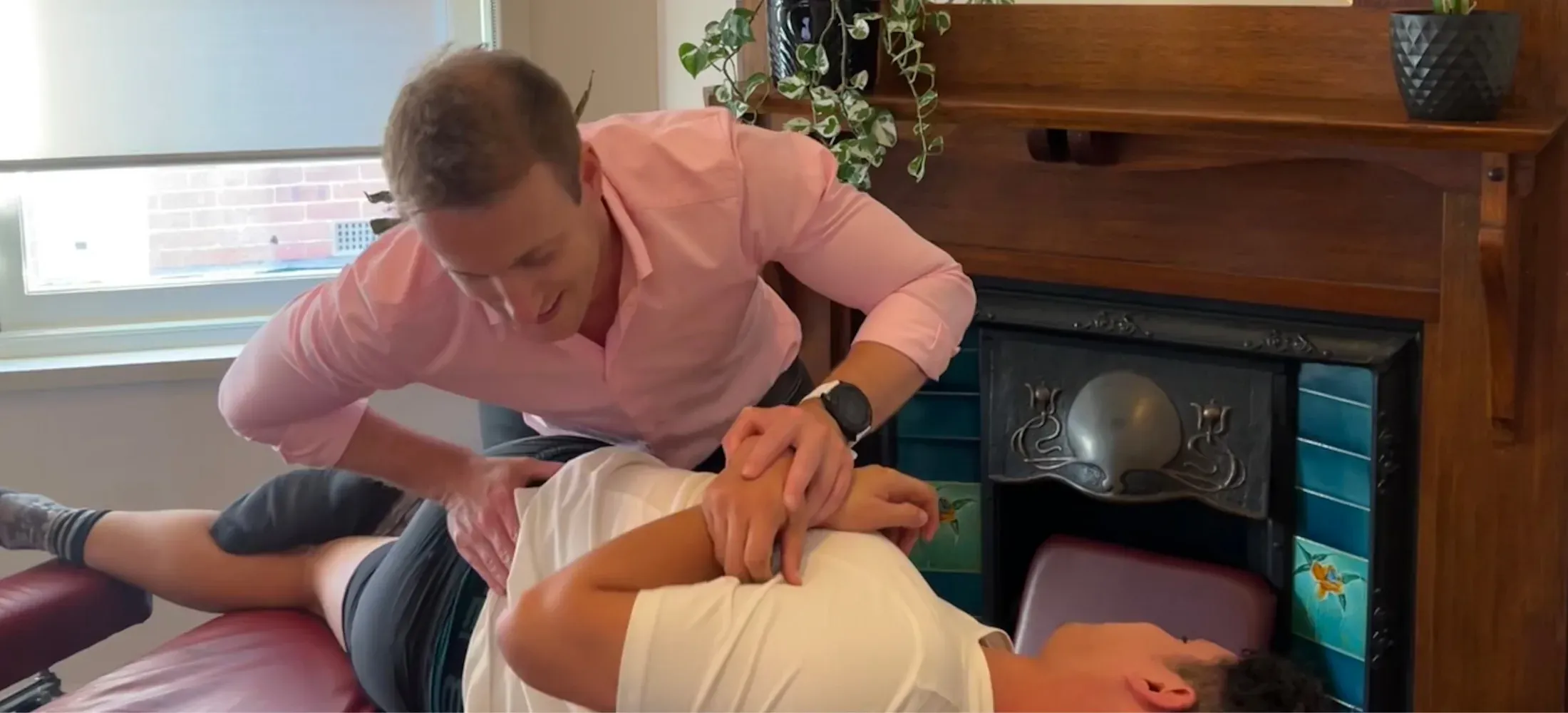
Lower back pain is the single most common reason people book an appointment here. It arrives as a dull ache that builds through a day of sitting, as a sudden spasm bending to pick something up, or as sharp pain that stops you mid-movement, and it affects work, sleep and mood well out of proportion to how it looks from outside.
Not all back pain is the same thing. It can come from the joints, the discs, the nerves or the muscles, and more than one is often involved at once. That is why the assessment is the part that matters: two people describing an identical ache can need quite different approaches.
What causes lower back pain
The presentations that come through this clinic most often are:
- Disc-related irritation, a bulging, herniated or degenerative disc, which is the presentation most likely to send symptoms into the leg
- Sacroiliac joint problems, pain low down and off to one side, at the base of the spine where it meets the pelvis
- Facet joint strain, typically worse bending backwards or twisting, and often easier when sitting
- Muscle spasm and soft tissue strain, which can be the original problem or the body’s guarding response to one
- Sciatica, nerve-related pain travelling down the leg, covered in more detail on its own page
- Postural loading from long periods sitting or standing in one position
- Pelvic and movement asymmetry, where one side is doing more work than the other
Even when pain arrives suddenly, tension has often been building for weeks. The moment it “went” is frequently the last straw rather than the cause.
When to see a chiropractor
Earlier is easier. A back that has been sore for a fortnight is a simpler problem than one that has been guarded and avoided for two years, because by then the movement patterns built around the original problem have become part of it.
Some presentations need emergency care rather than a chiropractic appointment. Go to a hospital emergency department now if lower back pain comes with any of:
- Numbness around the saddle area: the inner thighs, groin or genitals
- New difficulty controlling your bladder or bowel
- Weakness in both legs, or rapidly worsening weakness in one
- Back pain with fever and feeling unwell
These can indicate cauda equina syndrome or another condition needing immediate assessment. They are uncommon, but they are the ones worth knowing. The chiropractors screen for them at every first appointment.
Pain after a fall, a crash or a direct blow is different: book an examination. The chiropractor assesses it and refers you for an X-ray if one is needed.
What the assessment covers
Your first appointment runs about 30 minutes:
- A full history, what happened, what makes it worse, what you have already tried, and anything relevant in your general health
- A physical assessment, posture, how you move, and muscle and joint testing through the lower back, pelvis and hips
- An orthopaedic and neurological screen, including reflexes, strength and sensation where symptoms travel into a leg
- An explanation of what was found, in plain language, before any treatment happens
You will not be asked to commit to a plan before you understand what the chiropractor thinks is going on.
What treatment involves
Chosen from the assessment rather than from a formula. Depending on what is found, it may draw on:
- Chiropractic adjustment, a controlled movement applied by hand to a specific joint
- Specific technique for disc presentations, which is hands-on and adjusted during the appointment rather than run on a machine, there is no decompression table here
- Massage therapy for the muscular guarding that builds around an irritated joint
- Dry needling, where the presentation suits it
- Rehabilitation exercises to take home
- Posture correction and practical changes to how you sit, lift and work
Between appointments
What changes a long-standing back is mostly what happens outside the clinic, how long you sit before moving, how you get out of a car, what you do with a heavy load, and whether the exercises get done. The chiropractor will give you specific changes rather than a generic list, because useful advice depends on what your days actually look like.
If chiropractic is not the right answer, you will hear that at the assessment. Where specialist care is the next step, you will get a detailed letter outlining the findings and recommendations, including the specialist we believe is best suited to your needs.
If you are weighing the two professions before booking anything, chiropractor or physio for back pain sets out what actually separates them.
Frequently asked questions
My back went suddenly. Should I rest or keep moving?
Prolonged bed rest tends to stiffen a back rather than settle it, and current guidelines favour staying gently active within what you can tolerate. What that means in practice differs by presentation, though, a disc-related back and a facet-related back respond to different positions, so it is worth having it assessed rather than guessing. The chiropractor will tell you which movements to keep and which to leave for now.
Do I need a scan before I come in?
Usually not. Most lower back pain does not need imaging, and a scan taken without a clinical question to answer often finds age-related changes that are present in people with no pain at all. The chiropractor decides at the assessment whether imaging would change what they do, and refers to bulk-billed providers wherever possible. Bring anything you already have.
Is back pain caused by a slipped disc?
Discs do not slip, the term stuck but it describes something that does not happen anatomically. A disc can bulge or herniate, which is a real and common finding, but plenty of lower back pain has nothing to do with the disc at all and comes from the facet joints, the sacroiliac joint or the surrounding muscles. Which one applies changes the approach, which is the reason for assessing rather than assuming.
How long will it take to get better?
That depends on what the assessment finds and how long it has been going on. The chiropractor will tell you what they expect after the first appointment rather than before it, and there is no set package here. If chiropractic is not helping, you should hear that from the chiropractor rather than work it out yourself.
Can I claim this on my health fund?
Yes, if your extras policy includes chiropractic. HICAPS is on site so the claim goes through the terminal at the end of the appointment and you pay only the gap. Quote item code 1002 for an initial consultation to your fund and they will tell you what your policy pays, funds only discuss a policy with the member named on it, so that is always a call you make rather than one the clinic can make for you.
Ready to book?
Appointments Monday to Saturday, with confirmation by SMS.