
Conditions
Sciatica
Reviewed by Dr Voula Roumel, Chiropractor , registered since 1987, AHPRA CHI0000942872
Last updated
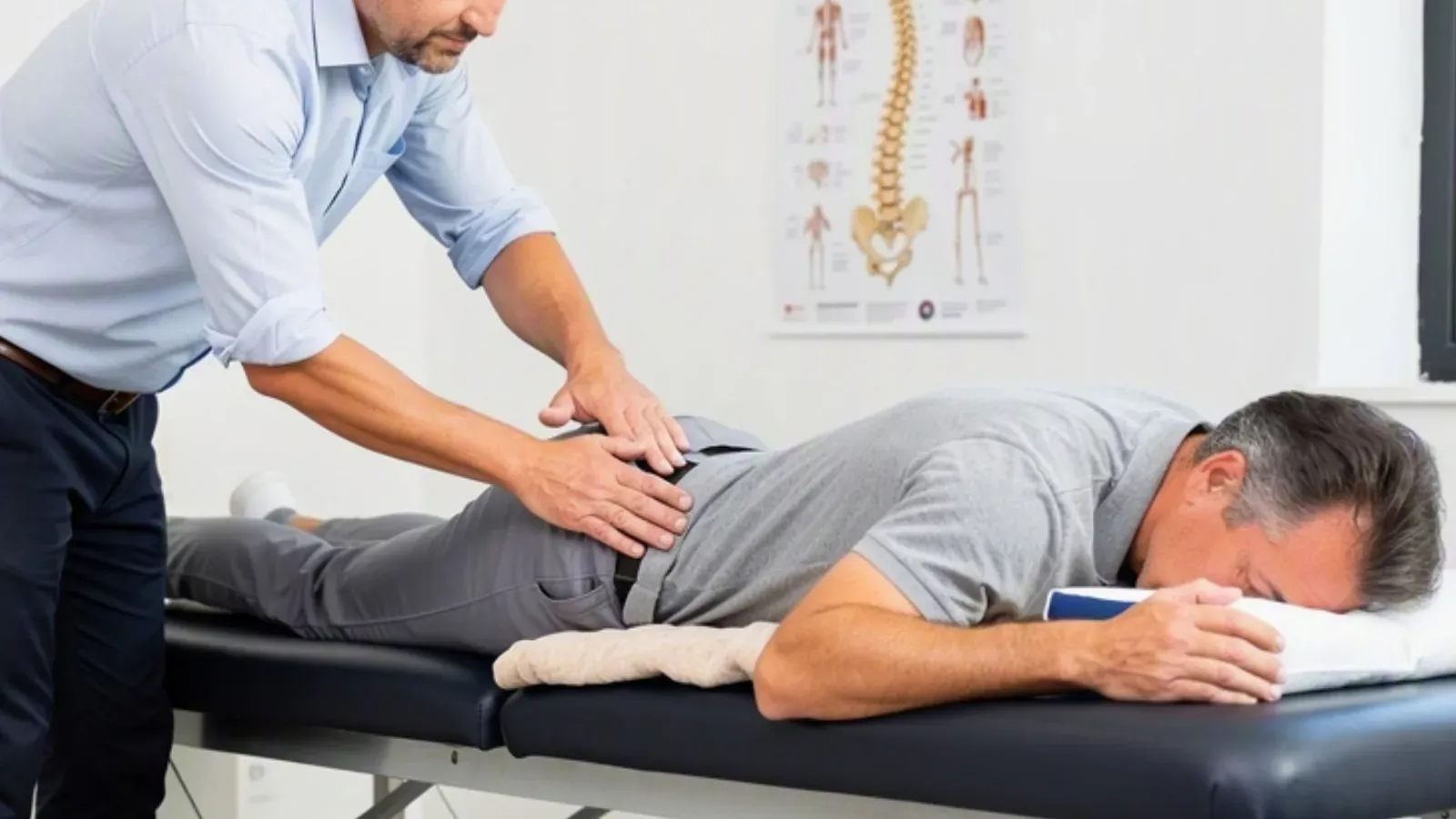
Sciatica is pain, pins and needles, numbness or weakness following the path of the sciatic nerve, from the lower back through the buttock and down the back of the leg, sometimes as far as the foot. It usually affects one side, and the leg symptoms are often more limiting than the back pain that came before them.
The important thing to understand is that sciatica is a symptom, not a diagnosis. It describes a pattern of where you feel something. Several different underlying problems produce that same pattern, and they do not respond to the same treatment, which is why identifying the cause matters more than treating the leg pain in isolation.
What causes sciatica
The sciatic nerve is the longest and thickest nerve in the body, and it can be irritated at more than one point along its route:
- Disc-related irritation in the lower back, where a bulging or irritated disc affects the nerve roots that feed into the sciatic nerve. This is the most common cause.
- Joint restriction in the lower spine, referring pain along the nerve’s path
- Compression through the buttock, where tightness in the gluteal muscles presses on the nerve as it passes beneath them, sometimes called piriformis-related sciatica, and it behaves differently to a disc cause
- Inflammation or swelling in the surrounding tissues
A disc-related sciatica and a piriformis-related sciatica can feel similar to the person experiencing them and need a different emphasis in treatment. That distinction is what the assessment exists to make.
When to see a chiropractor
As soon as leg symptoms start, rather than waiting for them to become unbearable. Sciatica that has been left for a long time tends to take longer to settle, and prolonged nerve irritation carries more potential for lasting effects, reduced reflexes, and muscle wasting in the lower leg, most noticeably in the calf, in more severe or long-running cases.
A small number of presentations need emergency care rather than a chiropractic appointment. Go to a hospital emergency department now if you notice:
- Numbness around the saddle area: the inner thighs, groin or genitals
- New difficulty controlling your bladder or bowel
- Weakness in both legs, or weakness in one leg that is getting rapidly worse
These can indicate cauda equina syndrome, a rare but serious condition caused by significant compression of the nerves at the base of the spine.
Progressive weakness, numbness that is spreading, or a foot that drags when you walk also warrant a prompt assessment rather than a wait-and-see approach, even outside those emergency signs.
What the assessment covers
Because sciatica has several possible sources, the first appointment is mostly about establishing which one applies:
- A full history, where the symptoms travel, what brings them on, what eases them, and what came first
- Movement and joint testing through the lower back, pelvis and hip
- A neurological screen, reflexes, strength and sensation down the leg, which is how nerve involvement is graded rather than guessed at
- An explanation of what was found, in plain language, before any treatment
Where imaging would change what the chiropractor does, they will say so and refer to a bulk-billed provider wherever possible.
What treatment involves
Tailored to what the assessment identified rather than a fixed formula:
- Chiropractic adjustment to address restriction in the lower back and pelvis
- Specific technique for disc presentations, hands-on and adjusted during the appointment, which is what suits an irritable, position-sensitive presentation
- Massage therapy for the gluteal and lower back muscles, particularly where compression through the buttock is part of the picture
- Dry needling, where the presentation suits it
- Rehabilitation exercises to take home
Between appointments
Position matters more with sciatica than with most presentations, because an irritated nerve is sensitive to what you do between appointments. The chiropractor will tell you which positions to favour, which to avoid for now, and how to sit, drive and sleep in a way that does not keep re-irritating it, advice that depends on which cause applies to you, which is why it is given after the assessment rather than before it.
If chiropractic is not the right answer, you will hear that. Where specialist care is the next step, you will get a detailed letter outlining the findings and recommendations, including the specialist we believe is best suited to your needs.
Frequently asked questions
Can a chiropractor help with sciatica?
It depends on what is causing it, which is why the assessment comes first. Where the cause is mechanical, disc-related irritation, joint restriction, or compression through the gluteal muscles, chiropractic care is a reasonable option. Where it is not, you should be told rather than treated around.
Will an adjustment make sciatica worse?
Technique is chosen for how irritable the presentation is, and an acutely irritable nerve is not treated the same way as a stiff joint. Tell the chiropractor what you are feeling during the appointment. The approach is adjusted from what you report, which is the point of doing it by hand rather than by machine.
Do I need a scan before I come in?
Usually not. Imaging is useful where it would change what happens next, significant or progressing neurological signs, or a presentation that has not responded as expected. Scans taken without a clinical question routinely find disc bulges in people with no symptoms at all.
Is sciatica the same as back pain?
No, though the two often travel together. Sciatica describes pain, pins and needles, numbness or weakness following the path of the sciatic nerve, usually down one leg, sometimes as far as the foot. Back pain that stays in the back is a different presentation. Sciatica is commonly preceded by a few weeks of ordinary back pain before the leg symptoms take over and become the more troublesome half.
Is walking good for sciatica?
Gentle walking usually helps more than rest, since lying still tends to stiffen things. But if walking clearly makes the leg symptoms worse, that is worth knowing about before you keep doing it, sciatica has several possible causes and they do not all respond to the same advice. Have it assessed rather than pushing through.
How long does sciatica take to settle?
It varies with what is driving it and how long it has been going on, so an honest answer is that the chiropractor will tell you after the assessment rather than before. What is consistent is that sciatica left for a long time tends to take longer, which is the argument for getting it looked at when the leg symptoms start rather than waiting for them to become unbearable.
Do you use a decompression table for sciatica?
No. There is no decompression table or traction machine at this clinic. What the chiropractors use for disc-related presentations is specific hands-on technique, chosen at the assessment and adjusted during the appointment from what they feel and what you report.
When is sciatica an emergency?
Rarely, but it happens. Numbness around the saddle area, inner thighs, groin or genitals, new difficulty controlling your bladder or bowel, or weakness in both legs need a hospital emergency department now, rather than a booking.
Ready to book?
Appointments Monday to Saturday, with confirmation by SMS.