
Services
Massage therapy
Reviewed by Dr Voula Roumel, Chiropractor , registered since 1987, AHPRA CHI0000942872
Last updated
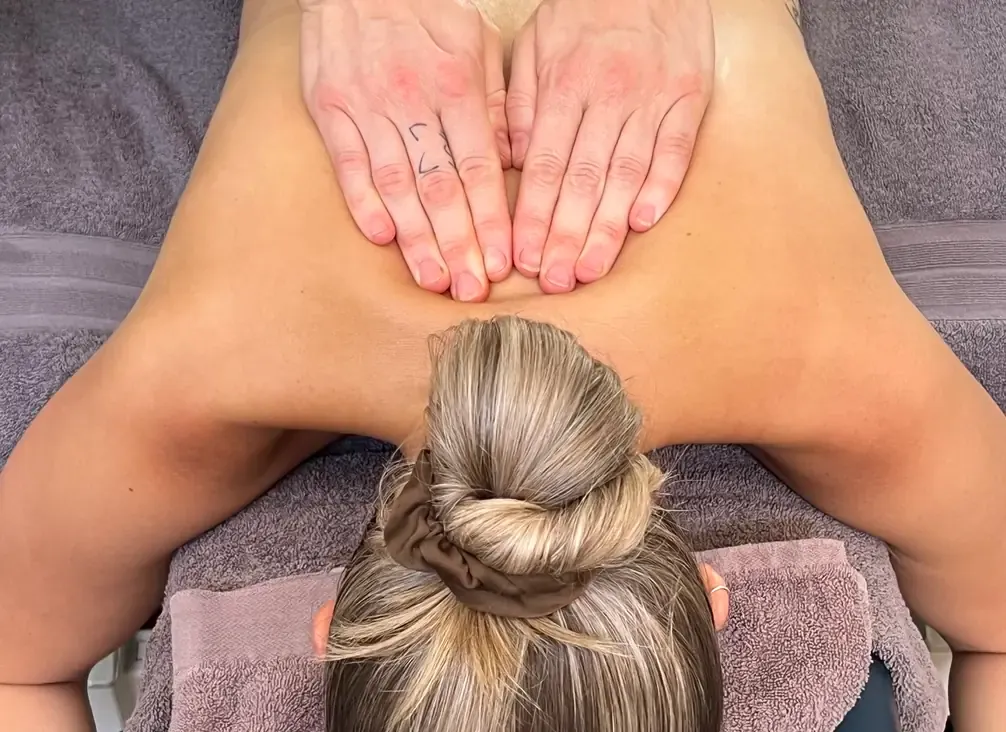
Muscles guard. When a joint is restricted or irritated, the muscles around it tighten to protect it, and that guarding then becomes part of the problem, because a joint held tightly by the tissue around it cannot move freely even once the original irritation settles.
Massage therapy here addresses that layer. It is used as part of chiropractic care rather than as a standalone service: directed at specific tissue identified in the assessment, usually alongside adjustment in the same appointment.
What it is used for
- Muscular guarding around a restricted or irritated joint
- Trigger points, tight bands within a muscle that refer sensation elsewhere, often somewhere surprisingly distant from where they sit
- Accumulated load through a training block, in sports presentations
- Neck, shoulder and jaw tension where it is part of a headache pattern
- Calf and foot musculature in plantar fasciitis
- Postural load through the upper back and shoulders from long days at a desk
How it fits the appointment
Most often it comes before the adjustment. Softening the tissue around a joint generally makes the movement easier to achieve and more comfortable to receive, so the two are done together rather than booked separately.
Where the assessment finds that muscular tension is the larger part of the picture, more of the appointment goes to it. Where the joint is the main issue, less. That balance is decided on the day rather than set in advance.
What it feels like
Firm and localised rather than broad and gentle. It should be firm enough to reach the tissue and no firmer, pressure that makes you tense against it is counterproductive, because a braced muscle cannot release.
Say if it is too much. More pressure is not better treatment.
Some soreness for a day afterwards is normal, especially where trigger points were worked on. Mention how you responded next time; it changes what the chiropractor does.
Health fund claiming
Where your extras policy includes remedial massage, it claims like any other service on your cover. What decides it is whether the service is on your policy, not which fund you are with.
HICAPS is on site, so the claim goes through the terminal at the end of the appointment and you pay only the gap. To know the figure in advance, call the number on the back of your card and ask: funds only discuss a policy with the member named on it, so that is always a call you make rather than one reception can make for you.
Every fee is on the fees page.
What it sits alongside
- Chiropractic adjustment for the joint itself
- Dry needling, where a trigger point needs more targeted work than hands can reach
- Rehabilitation exercises, the part that stops the tension re-accumulating
Massage that keeps being needed for the same tissue every few weeks is usually a sign the load creating it has not changed. The chiropractor will raise that rather than book you in indefinitely.
Frequently asked questions
Is this the same as a relaxation massage?
The intent is different. Remedial massage here is directed at specific tissue identified in an assessment, the muscles guarding a restricted joint, or a trigger point referring sensation elsewhere. It is often firmer and more localised than a full-body relaxation massage, and it is usually part of a treatment rather than the whole appointment.
Can I claim massage on my health fund?
Where your extras policy includes remedial massage, yes. What decides it is whether the service is on your cover, not which fund you are with. Call the number on the back of your card and ask, funds only discuss a policy with the member named on it, so checking cover is always a call you make rather than one the clinic can make for you.
Should I have massage before or after an adjustment?
Usually before, and often in the same appointment. Softening the muscular guarding around a joint tends to make the adjustment more comfortable and the movement easier to achieve. The chiropractor decides the order from what they find on the day.
Will it be sore afterwards?
Sometimes for a day, in the way muscles are after unfamiliar exercise, particularly if trigger points were worked on. That settles. Tell the chiropractor how you responded at your next appointment. It is useful information and it changes what they do.
How firm should it be?
Firm enough to reach the tissue, not so firm that you tense against it, because guarding against pressure defeats the point. Say if it is too much. More pressure is not better treatment, and a patient bracing through a massage gets less out of it than one who can stay relaxed.
Ready to book?
Appointments Monday to Saturday, with confirmation by SMS.