
Conditions
Headaches and migraine
Reviewed by Dr Voula Roumel, Chiropractor , registered since 1987, AHPRA CHI0000942872
Last updated
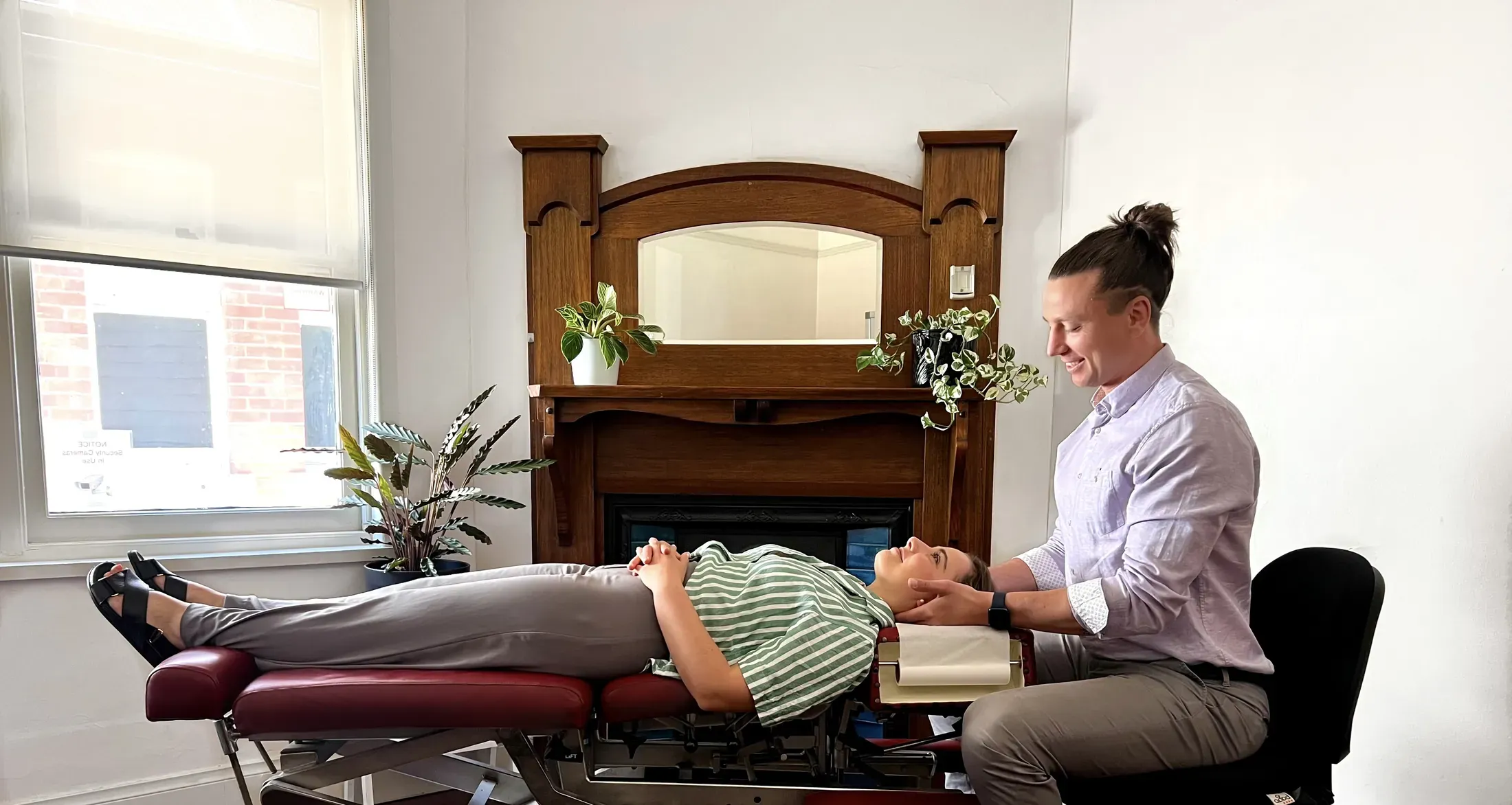
Headaches and neck tension turn up together often enough that a lot of people never separate them, a headache that builds through a day at a screen, one that starts at the base of the skull, or one that arrives after a bad night’s sleep in an awkward position.
Some headaches have a musculoskeletal component and some do not, and telling those apart is the useful thing an assessment does. Chiropractic care addresses the first. Where the picture is something else, you should hear that rather than be treated around it.
The types that have a neck component
- Tension-type headache, a band-like ache, often both sides, commonly alongside tightness through the neck, shoulders and jaw
- Cervicogenic headache, referred from the joints and soft tissue of the upper neck. Typically one-sided, often starting at the base of the skull and spreading forward, and it usually changes with neck position
- Postural headache, builds through prolonged sitting or screen use and eases when you move, driven by sustained load rather than a single event
- Jaw-related headache, where clenching or grinding is loading the muscles around the temple and jaw. Covered further on the TMJ and jaw pain page
Migraine is a different condition with its own neurological mechanism, and chiropractic care does not treat it. What complicates this is that many people have both, a migraine disorder and a neck contributing on top. The assessment is about establishing whether that second part is present, because it is the part chiropractic can work on.
When to see a chiropractor
If headaches are recurring, if they track with your desk days, or if neck stiffness turns up alongside them, an assessment will at least tell you whether there is a musculoskeletal component worth addressing.
Some headaches need emergency care rather than a chiropractic appointment. Go to a hospital emergency department now for:
- A sudden, severe headache unlike anything you have had before
- A headache with fever, a stiff neck, or a rash
- New weakness, numbness, confusion, slurred speech or vision loss
- A headache following a head injury
- A headache that is progressively worsening over days or weeks, or is markedly worse lying down or first thing in the morning
The chiropractors screen for these at every first appointment.
What the assessment covers
The first appointment is mostly about pattern and mechanism:
- A full history, where the headache starts, where it goes, how long it lasts, what brings it on, what you have already tried, and what a bad week looks like compared with a good one
- Movement testing through the neck and upper back, including whether neck positions reproduce or change your symptoms
- Assessment of the surrounding muscles, neck, shoulders and jaw
- A neurological screen
- An explanation of what was found, before any treatment
Where imaging or a referral would change what happens next, the chiropractor will say so.
What treatment involves
Chosen from the assessment. Depending on what is found, it may draw on:
- Chiropractic adjustment to address restriction in the upper neck and upper back
- Massage therapy for the neck, shoulder and jaw musculature
- Dry needling, where trigger points are part of the picture
- Posture correction, desk height, screen position, how a phone is held
- Rehabilitation exercises for the deep neck muscles that fatigue over a long day
Technique is matched to the person and to how irritable things are. An upper neck that is already sensitised is not treated the same way as one that is simply stiff.
Between appointments
Headache patterns respond to what happens across a whole week, not just to what happens in the appointment. The chiropractor will look at the specific things loading you, the height of a monitor, hours without moving, sleep position, jaw clenching, hydration, and give you changes that fit your actual days rather than a generic list.
Keeping a simple record of when headaches arrive and what preceded them is worth more than it sounds. Patterns that are invisible day to day are often obvious across three weeks, and it makes the second appointment considerably more useful than the first.
If chiropractic is not the right answer, you will hear that. Where specialist care is the next step, you will get a detailed letter outlining the findings and recommendations, including the specialist we believe is best suited to your needs.
Frequently asked questions
Can a chiropractor help with headaches?
Where the headache has a musculoskeletal component, restricted neck movement, upper back and jaw tension. That component is what chiropractic care addresses. Tension-type and cervicogenic headaches commonly do. Migraine is a different condition with its own mechanism, and chiropractic care does not treat it, though many people have both a migraine disorder and a neck contributing on top.
How many appointments before I know if it is helping?
Headache patterns are best judged across two or three weeks rather than appointment to appointment, because they vary naturally. Keeping a simple record of when headaches arrive and what preceded them makes that judgement possible, and makes the second appointment considerably more useful than the first.
How do I know if my headache is coming from my neck?
Cervicogenic headaches tend to start at the base of the skull and spread forward, are usually one-sided, and often change with neck position or after a long period at a desk. That pattern is suggestive rather than diagnostic, which is why the assessment tests neck movement and reproduces symptoms rather than working from your description alone.
Can a chiropractor treat migraine?
Migraine and cervicogenic headache are different things, and a lot of people have both. What a chiropractic assessment can establish is whether there is a musculoskeletal component contributing to your pattern, restricted neck movement, upper back and jaw tension, and that component is what chiropractic care addresses. Where the picture is primarily migraine, the chiropractor will say so and refer rather than treat around it.
I have had headaches for years. Is it too late?
No, but long-standing patterns take longer to change than recent ones, and it is worth going in with that expectation. The chiropractor will tell you after the assessment what they think is contributing and what they expect, rather than before it.
Will I need to stop my medication?
That is a conversation with whoever prescribed it, not with the clinic. Nobody here will advise you to stop or change a prescribed medication. Chiropractic care sits alongside what your doctor has organised rather than instead of it.
When is a headache an emergency?
A sudden severe headache unlike any you have had before, the kind people describe as thunderclap, needs emergency assessment now, not a booking. So does a headache with fever and a stiff neck, with new weakness, confusion or vision loss, or one that follows a head injury.
Ready to book?
Appointments Monday to Saturday, with confirmation by SMS.