
Services
Rehabilitation exercises
Reviewed by Dr Voula Roumel, Chiropractor , registered since 1987, AHPRA CHI0000942872
Last updated
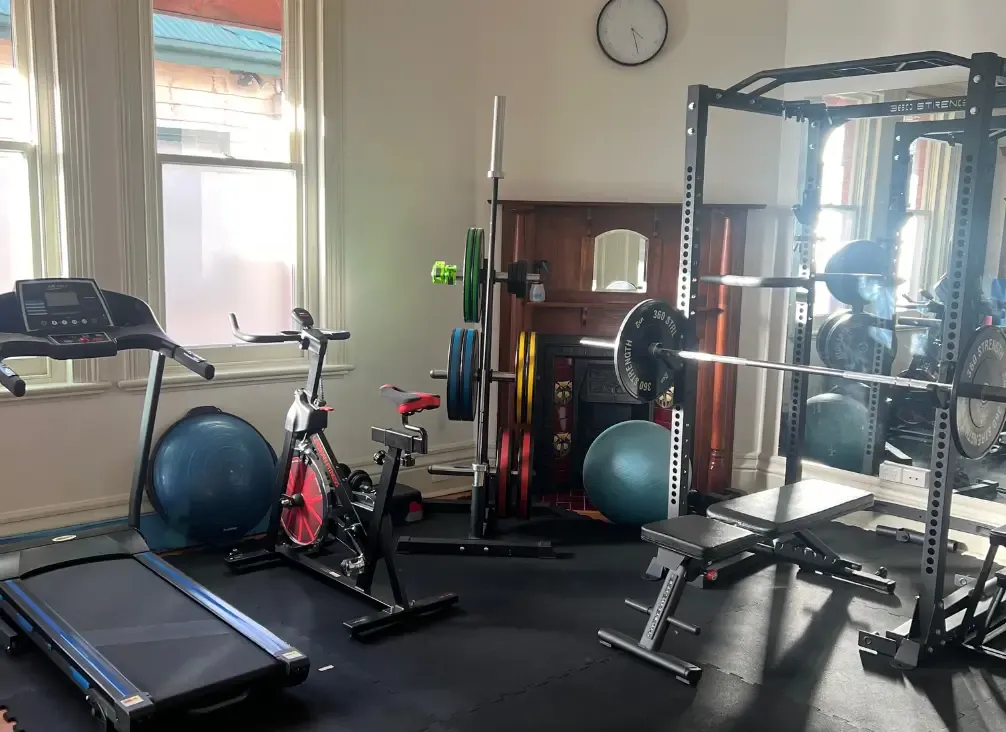
The exercises you take home are the part of a treatment that works when you are not in the clinic. An appointment lasts under an hour, once or twice a week at most, the other hundred-odd waking hours are where a long-standing problem either changes or does not.
That is the honest case for them, and it is why they are prescribed here rather than handed out as a leaflet.
How the exercises get chosen
From the assessment, not from a template. Two people with the same complaint can need opposite things: one needs a stiff segment to move more, the other needs an over-mobile one to be better controlled, and giving either the wrong programme makes things worse rather than slower.
What the chiropractor is deciding between:
- Mobility work, where something has stopped moving through its range
- Strength and loading work, where a structure needs to tolerate more than it currently does, which is most tendon presentations
- Motor control work, where the range and the strength are both fine but the timing and coordination are not
- Postural endurance, where the problem is not capacity but how long it can be sustained before things fatigue
Why the list is deliberately short
Rehab programmes fail on volume, not on exercise choice. A list of ten exercises is abandoned in the second week; three that fit into an existing routine get done for months.
So a first programme is usually two or three things, tied to something you already do, after the shower, while the kettle boils, before you get in the car. It grows as things progress, and it changes when the presentation does.
What you get
- A demonstration in the appointment, and you doing it back so the chiropractor can correct it. Most exercises fail because they are performed slightly wrong rather than because they were the wrong choice
- How many, how often, and for how long, specifically, rather than “a few times a day”
- What it should feel like, and what would mean stop and mention it
- When it changes, so you are not doing week-one exercises in week eight
What it is used alongside
Rehabilitation exercise is rarely the whole of a plan. It usually sits with:
- Chiropractic adjustment, where restriction needs addressing before loading makes sense
- Massage therapy for the muscular guarding around an irritated area
- Posture correction, which is the same conversation applied to the positions you hold all day rather than the ones you train
Common presentations it forms part of include lower back pain, neck pain, sciatica and plantar fasciitis, the last of which is almost entirely a loading problem, and where the exercises do more of the work than anything done in the appointment.
If you have not been doing them
Say so. It is the most useful thing you can tell a chiropractor and the thing patients are most reluctant to admit, and it changes what happens next: a programme that is not being done is a programme that needs to be shorter, easier, or attached to a different moment in the day. Nobody here is going to be annoyed about it, and pretending otherwise wastes the appointment.
Frequently asked questions
Why so few exercises? I expected a longer list.
Because a long list does not get done. Three exercises someone actually performs beat twelve they abandon in the second week, and the failure mode of rehab programmes is almost always volume rather than choice. The list grows as things progress, but it starts at what fits into your day as it currently is.
How long until I notice a difference?
It depends what the exercises are for. Range-of-movement work often feels different within a week or two; strength and tendon loading take considerably longer, because the tissue itself has to adapt and that is measured in months rather than sessions. The chiropractor will tell you which kind yours are so you know what you are waiting for.
What if an exercise hurts?
Tell the chiropractor rather than pushing on or quietly dropping it. Some discomfort during loading work is expected and some is a signal to change something, and which is which depends on the exercise and the presentation. An exercise that hurts in a way nobody has explained to you is one you will stop doing, so it is worth the two minutes to sort out.
Do I need equipment or a gym?
Usually not. Most of what is prescribed here uses body weight, a wall, a step, or a resistance band you can keep in a drawer. If something genuinely needs equipment the chiropractor will say so and suggest the cheapest way to get it, rather than assuming a gym membership.
Can I keep doing them once I stop coming in?
That is generally the point. The exercises that helped a presentation settle are frequently the ones that keep it settled, and the chiropractor will tell you which of them are worth keeping as a habit and which were specific to the recovery.
Ready to book?
Appointments Monday to Saturday, with confirmation by SMS.