
Services
Posture correction
Reviewed by Dr Voula Roumel, Chiropractor , registered since 1987, AHPRA CHI0000942872
Last updated
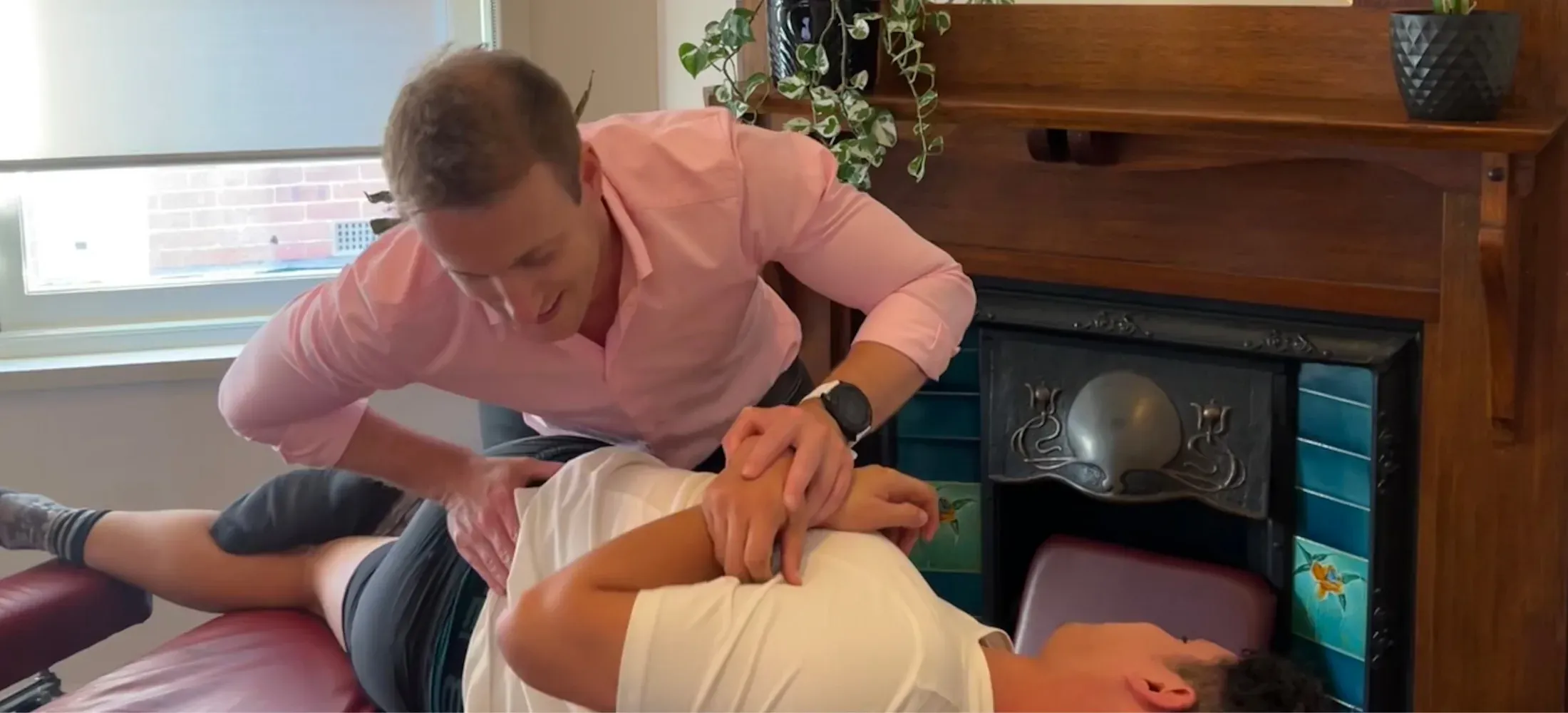
Posture work is less about standing up straight than most people expect. The evidence that a particular posture causes pain is weaker than the internet suggests, plenty of people with textbook-poor posture have none at all, and plenty with excellent posture are in pain.
What matters clinically is sustained load: how long any one position is held without changing, and whether the tissue holding it has the endurance for the job. The best posture is largely the next one.
What the assessment looks at
- How you actually sit and stand, rather than how you arrange yourself when someone is watching
- Where movement has been lost, a stiff upper back forces the neck to compensate, and the neck is usually where it hurts
- Endurance in the muscles that hold a position, which is generally the limiting factor rather than strength
- What your day looks like, hours at a screen, time in a car, how a phone is held, what you sleep on
- What is structural and what is habitual, because they need different answers and only one of them changes
That last distinction is the important one. A structural curve is not a habit, and treating it as one wastes months. Where the assessment finds something structural, you will be told plainly. See scoliosis management for the presentation where this comes up most.
What actually changes it
Three things, roughly in order of how much difference they make:
Changing position more often. The single highest-value change, and the cheapest. A timer that gets you up every 40 minutes does more for most desk workers than any equipment purchase.
Changing the setup so a neutral position is the easy one. Monitor height, chair height, where the keyboard sits, whether you are looking down at a laptop all day. Effort spent holding a good position in a badly arranged workspace is effort that will not last.
Building the endurance to hold it. This is where rehabilitation exercises come in, usually short, specific, and unglamorous, targeting the deep neck and upper back muscles that fatigue first.
What treatment involves
- Chiropractic adjustment where restriction is forcing compensation elsewhere, commonly a stiff upper back driving neck symptoms
- Massage therapy for the muscular load that builds through long static days
- Dry needling, where trigger points are involved
- Practical workspace changes, specific to your setup rather than a generic ergonomics list
- Rehabilitation exercises for endurance
What it is commonly part of
Neck pain, headache patterns and lower back pain that tracks with desk days. It is rarely a presentation on its own, usually it is the reason one of those keeps coming back.
Frequently asked questions
Is bad posture the cause of my pain?
Sometimes contributory, rarely the whole story, and the link is weaker than the internet suggests, plenty of people with textbook-poor posture have no pain at all. What matters more clinically is sustained load: how long a position is held without changing, and whether the tissue has the endurance for it. That is what the assessment is looking at.
Can posture actually be changed as an adult?
Habitual position can change, yes, and so can the endurance that lets you hold a better one. What does not change is bone shape. A structural curve is not a habit. Distinguishing the two is part of the assessment, and it matters because working hard at something structural is frustrating and pointless.
Do I need a standing desk?
Not necessarily. Standing all day loads different tissue and produces its own complaints. The useful change is usually alternating rather than swapping one fixed position for another. A cheap timer that reminds you to move often does more than an expensive desk.
What about posture braces?
They hold you in a position rather than building the capacity to hold it yourself, so anything gained tends to stop when the brace comes off. There are specific situations where one is useful for a short period, and the chiropractor will say if yours is one, but as a general solution they mostly delay the work that does help.
How long before I notice a difference?
Comfort through a working day often shifts within a few weeks if the desk changes and the exercises get done. The endurance to hold a position without thinking about it takes longer, because it is a strength adaptation. The chiropractor will tell you which you are working on.
Ready to book?
Appointments Monday to Saturday, with confirmation by SMS.