
Blog
Desk job back pain: what actually helps
Reviewed by Dr Voula Roumel, Chiropractor , registered since 1987, AHPRA CHI0000942872
Last updated
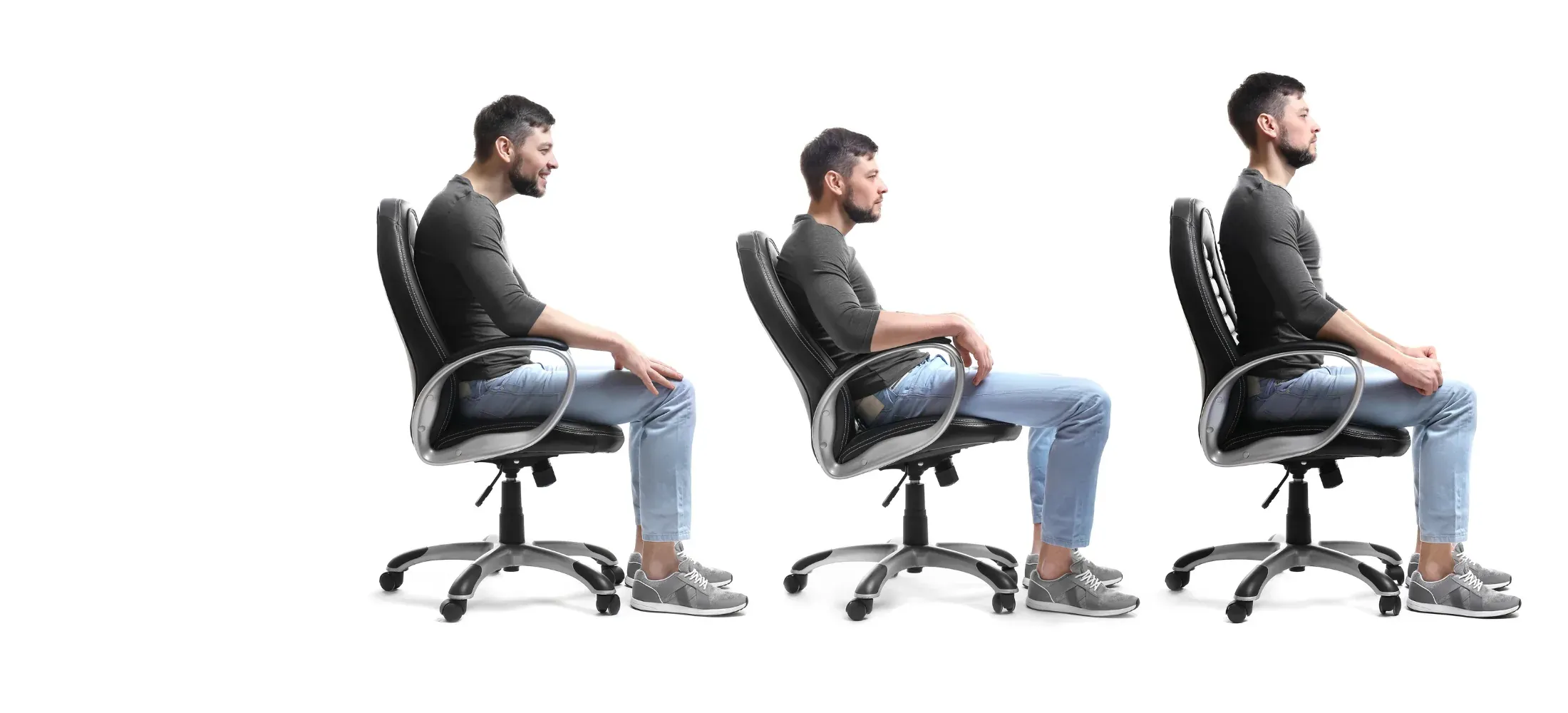
Desk work produces a recognisable set of presentations: neck pain that builds through the afternoon, upper back tension across the shoulder blades, headaches that track with screen days, and lower back pain that is worse getting out of a chair than in it.
Sitting is less of a problem than sitting still. A spine tolerates almost any position for a while and no position for hours, and that distinction changes what actually helps.
What helps, in order of how much difference it makes
1. Changing position more often
The highest-value change and the cheapest. Every 30 to 40 minutes, change what your body is doing, stand up, walk somewhere, or simply change shape for a minute.
A timer beats willpower, because the whole problem is that absorbed work makes time disappear.
2. Fixing the setup so neutral is the easy position
Effort spent holding good posture in a badly arranged workspace does not last. Worth checking:
- Screen height, the top of the screen roughly at eye level. A laptop on a desk puts your head down for eight hours
- A separate keyboard and mouse if you use a laptop, which is the single most effective purchase on this list
- Chair height so your feet are supported and your hips sit slightly above your knees
- Where the mouse sits, reaching forward and out loads the shoulder and neck continuously
3. Building endurance
The muscles that hold a position fatigue before they fail. Short, specific rehabilitation exercises for the deep neck and upper back are unglamorous and they work, provided they are few enough to actually get done.
4. Treatment, where something has already changed
Where a segment has stopped moving or muscular guarding has set in, that is what chiropractic adjustment and massage therapy address. But treating a body that goes straight back to the same setup means treating it again next month, which is why the order above matters.
What about standing desks
Only useful if you alternate. Standing all day loads different tissue and produces its own complaints, and swapping one fixed position for another achieves less than people expect.
What about posture braces
They hold you in a position rather than building the capacity to hold it yourself, so the gains tend to stop when the brace comes off. There are short-term situations where one is useful: the chiropractor will say if yours is one.
When it is worth getting assessed
If the pattern recurs every week, if it is spreading, or if there is any pins and needles, numbness or weakness into an arm, that last one changes the assessment and should not be worked around.
A first appointment covers a full history, a physical assessment, an orthopaedic and neurological screen, and an explanation of what was found. See what to expect.
More articles
Frequently asked questions
Is sitting really that bad for your back?
Sitting itself is less of a problem than sitting still. A spine tolerates almost any position for a while and no position for hours, and the research on posture as a direct cause of pain is weaker than most advice suggests. What loads tissue is sustained position without variation, which is why changing position frequently does more than perfecting one.
Should I get a standing desk?
Only if you will alternate. Standing all day loads different tissue and produces its own complaints, so swapping one fixed position for another achieves less than people hope. A timer that reminds you to change position often does more than an expensive desk does.
What is the single most useful change?
Moving more often. It is free, it takes no equipment, and it beats every ergonomic purchase on the list. Every 30 to 40 minutes, change what you are doing with your body, stand, walk, or simply change shape for a minute.
Are posture braces worth it?
Generally not as a solution. They hold you in a position rather than building the capacity to hold it yourself, so what is gained tends to stop when the brace comes off. There are short-term situations where one helps and the chiropractor will say if yours is one.
How long before it improves?
Comfort through a working day often shifts within a few weeks once the setup changes and the exercises get done. Building the endurance to hold a better position without thinking about it takes longer, because that is a strength adaptation rather than a habit change.
Ready to book?
Appointments Monday to Saturday, with confirmation by SMS.