
Conditions
Hip pain
Reviewed by Dr Voula Roumel, Chiropractor , registered since 1987, AHPRA CHI0000942872
Last updated
Hip pain is a description of an area rather than a diagnosis, and the hip region covers several structures that produce quite different presentations.
Where you feel it is the most useful first clue. Pain in the groin most often points to the hip joint itself. Pain at the side, over the bony point, is typically tendon or bursa related. Pain in the buttock frequently refers from the lower back or the sacroiliac joint rather than from the hip at all.
What causes it
- Lateral hip pain, the gluteal tendons and the bursa on the outside of the hip, the most common presentation seen here. Worst lying on that side, and often worse after walking on a camber
- Hip joint changes, including osteoarthritis, groin pain, morning stiffness, and gradual loss of rotation
- Referred pain from the lower back or the sacroiliac joint, felt in the buttock and sometimes down the leg
- Hip flexor and groin strain, usually load-related and common in runners and team sport
- Deep gluteal irritation of the sciatic nerve as it passes through the buttock. See sciatica
When to see a chiropractor
Early with load-related presentations, because lateral hip pain in particular tends to become entrenched and is slow to settle once it has.
After a fall, book an examination. The chiropractor examines it and refers you for an X-ray if one is needed. Hip pain with fever, unexplained weight loss, or pain at night unrelated to position also needs assessing promptly, so mention it when you book.
What the assessment covers
- A full history, where exactly it is, what brings it on, whether it wakes you, and what changed before it started
- Movement and strength testing through the hip, pelvis and lower back
- Which structures reproduce your pain, which is how groin, lateral and buttock presentations are separated
- How you walk, and what the foot and knee are contributing
- An explanation of what was found, before any treatment
What treatment involves
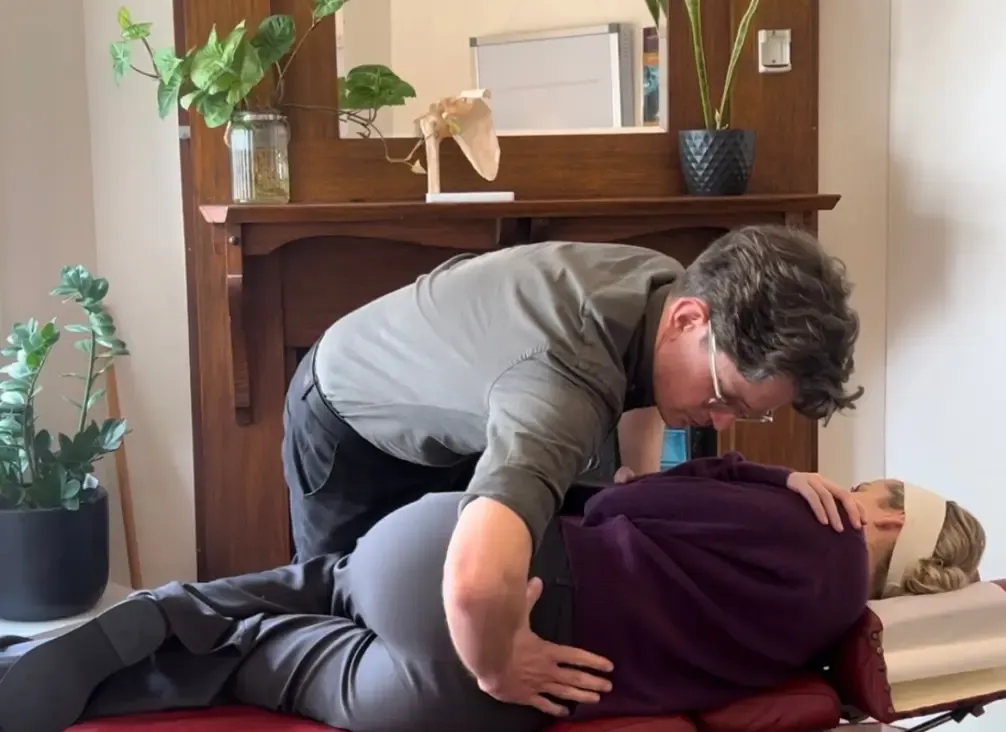
- Chiropractic adjustment of the hip, pelvis and lower back where restriction is contributing
- Massage therapy through the glutes, hip flexors and surrounding musculature
- Dry needling, where trigger points are part of it
- Shockwave therapy for long-standing gluteal tendon presentations that have plateaued
- Rehabilitation exercises, progressive loading, which does most of the work in tendon presentations
Between appointments
Load management is most of it. For lateral hip pain that means how you sleep, whether you sit cross-legged, standing habits that hang on one hip, and the stretches to stop doing.
The chiropractor will be specific. Where imaging or specialist care is the next step, you will get a detailed letter outlining the findings and recommendations, including the specialist we believe is best suited to your needs.
Frequently asked questions
Is my hip pain actually coming from my hip?
Often not. Pain felt at the side of the hip is frequently tendon or bursa related rather than from the hip joint itself, and pain in the buttock commonly refers from the lower back or the sacroiliac joint. True hip joint pain is most often felt in the groin. Where you feel it is the first thing the assessment uses, because it narrows the possibilities considerably before anything is touched.
Why does it hurt when I lie on that side?
Pain lying on the affected side is characteristic of lateral hip presentations, the tendons and bursa on the outside of the hip being compressed between the bone and the surface you are lying on. Sleeping with a pillow between the knees often helps in the meantime, and it is one of the more useful things to mention at your appointment because it points the assessment in a particular direction.
Should I stretch it?
Not always, and this is where well-meant advice regularly makes lateral hip pain worse. Stretches that pull the leg across the body compress exactly the tissue that is already being compressed. Which stretches suit depends on what the assessment finds, which is the argument for asking rather than following a video.
Could it be arthritis?
It can be, particularly with groin pain, stiffness first thing in the morning, and a gradual loss of rotation over years. Hip osteoarthritis is common and it is managed rather than cured. The chiropractor will tell you if that is what the picture suggests and will refer for imaging or specialist assessment where it would change what happens next.
What if my hip hurts after a fall?
Book an examination. The chiropractor examines it and refers you for an X-ray if one is needed. Hip pain with fever, unexplained weight loss, or night pain unrelated to position also needs assessing promptly, so mention it when you book.
Ready to book?
Appointments Monday to Saturday, with confirmation by SMS.