
Conditions
Elbow pain
Reviewed by Dr Voula Roumel, Chiropractor , registered since 1987, AHPRA CHI0000942872
Last updated
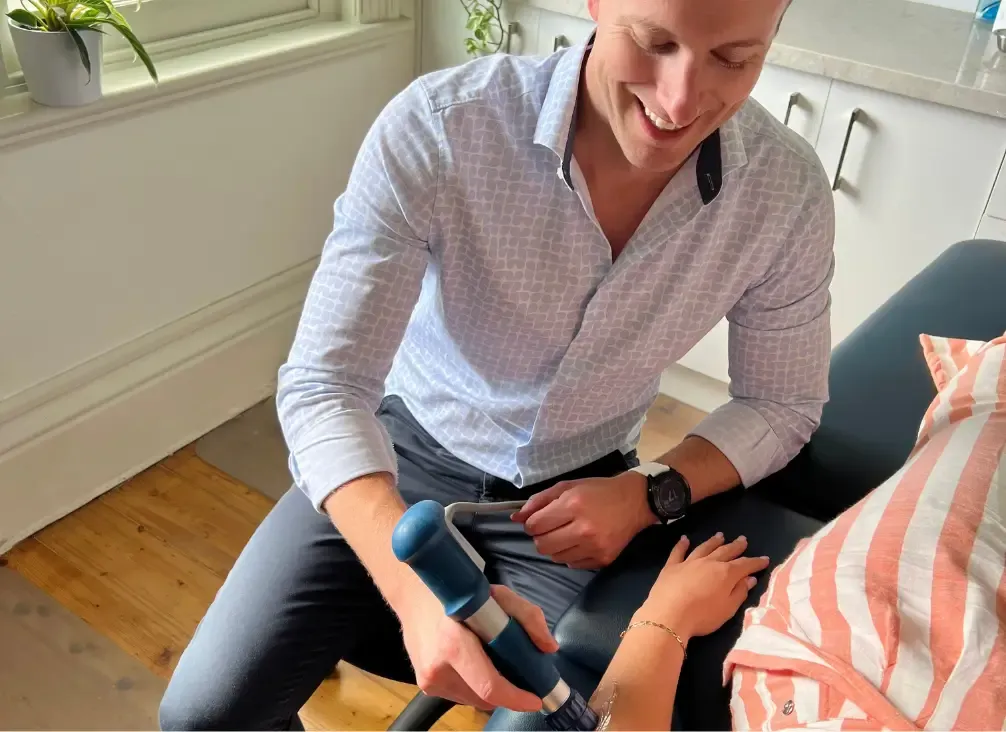
Most elbow pain is a tendon problem at one side of the joint or the other, the extensor tendons on the outside in tennis elbow, the flexors on the inside in golfer’s elbow. It shows up in gripping, lifting, typing and carrying, and it rarely has anything to do with sport.
The elbow is also the middle of a chain. The nerves supplying the forearm come from the neck, the shoulder governs how the arm is positioned under load, and the wrist decides how the tendons are being pulled. Assessing the elbow in isolation is how a problem gets treated repeatedly without settling.
What comes through the clinic
- Tennis elbow, pain on the outside, worse gripping with the palm down
- Golfer’s elbow, pain on the inside, worse with gripping and wrist flexion
- Bursitis, swelling and tenderness over the point of the elbow
- Joint restriction through the elbow and forearm
- Referred pain from the neck or shoulder, often with tingling or weakness rather than local tenderness
Who tends to get it
Office workers and anyone at a keyboard and mouse all day; trades using tools repetitively; musicians; people who lift small children; and anyone who has recently increased how much gripping their week involves.
What the assessment covers
- A history, which side, what provokes it, how long, and what changed before it started
- Testing the whole chain, wrist, elbow, shoulder and cervical spine
- Grip and resisted testing, to identify which tendon group is involved
- A neurological screen where there is tingling, numbness or weakness
- An explanation of what was found, before any treatment
What treatment involves
- Mobilisation of the elbow and forearm joints where movement is restricted
- Massage and soft tissue therapy through the forearm and the muscles that attach at the elbow
- Dry needling, where trigger points are part of the picture
- Chiropractic adjustment of the neck and upper back where the assessment points there
- Shockwave therapy for longstanding tendon presentations that have not responded to loading alone
- Rehabilitation exercises, graded loading of the tendon, which is the part that does most of the work over time
- Practical changes to grip, tool use and workstation setup
What the recovery actually looks like
Tendons adapt slowly. A realistic timeframe for tennis elbow is months rather than weeks, and the thing that shortens it is appropriate loading rather than rest. Expect the plan to centre on a progressive exercise programme, with hands-on treatment supporting it rather than replacing it.
Related
Where symptoms travel into the hand, carpal tunnel syndrome covers the median nerve picture, and where the neck is driving it there is more on neck pain. Shoulder pain and joint pain cover the neighbouring ground. Fees and every item code are on the fees page.
Frequently asked questions
What is the difference between tennis elbow and golfer's elbow?
Which side hurts. Tennis elbow, lateral epicondylalgia, is pain on the outside of the elbow, where the wrist extensor tendons attach, and it is provoked by gripping and lifting with the palm down. Golfer's elbow is the inside of the elbow, at the flexor attachment, and tends to bite with gripping and wrist flexion. Neither requires playing the sport it is named after; both are far more often work or hobby related.
How long does tennis elbow take to settle?
Tendon problems are slow, and honest ranges here are measured in months rather than weeks, often around three to six, sometimes longer where it has been going on a while before anything was done about it. What shortens it is loading the tendon appropriately rather than resting it completely, which is why the exercise side of the plan matters more here than in most presentations.
Should I rest it completely?
Generally no. Complete rest settles the pain and then it returns as soon as you use the arm, because the tendon has not been given any reason to adapt. What tends to work is reducing the specific provoking load while keeping the tendon working at a level it tolerates, then building from there. Your chiropractor will set where that line sits for you.
Why is my neck being assessed for elbow pain?
Because nerves supplying the forearm come from the neck, and irritation there can produce pain and weakness that presents at the elbow. It is not always the answer, but where forearm pain comes with tingling, numbness or weakness rather than pure local tenderness, the neck is a genuine candidate and skipping it means missing the cause.
Do braces and straps help?
A counterforce strap helps some people get through provoking activity, and it is reasonable to try. It manages load rather than resolving the problem, so it works best alongside the loading programme rather than as the whole plan. If you are relying on it to get through every day, that is worth raising at the appointment.
Ready to book?
Appointments Monday to Saturday, with confirmation by SMS.