
Conditions
Knee pain
Reviewed by Dr Voula Roumel, Chiropractor , registered since 1987, AHPRA CHI0000942872
Last updated
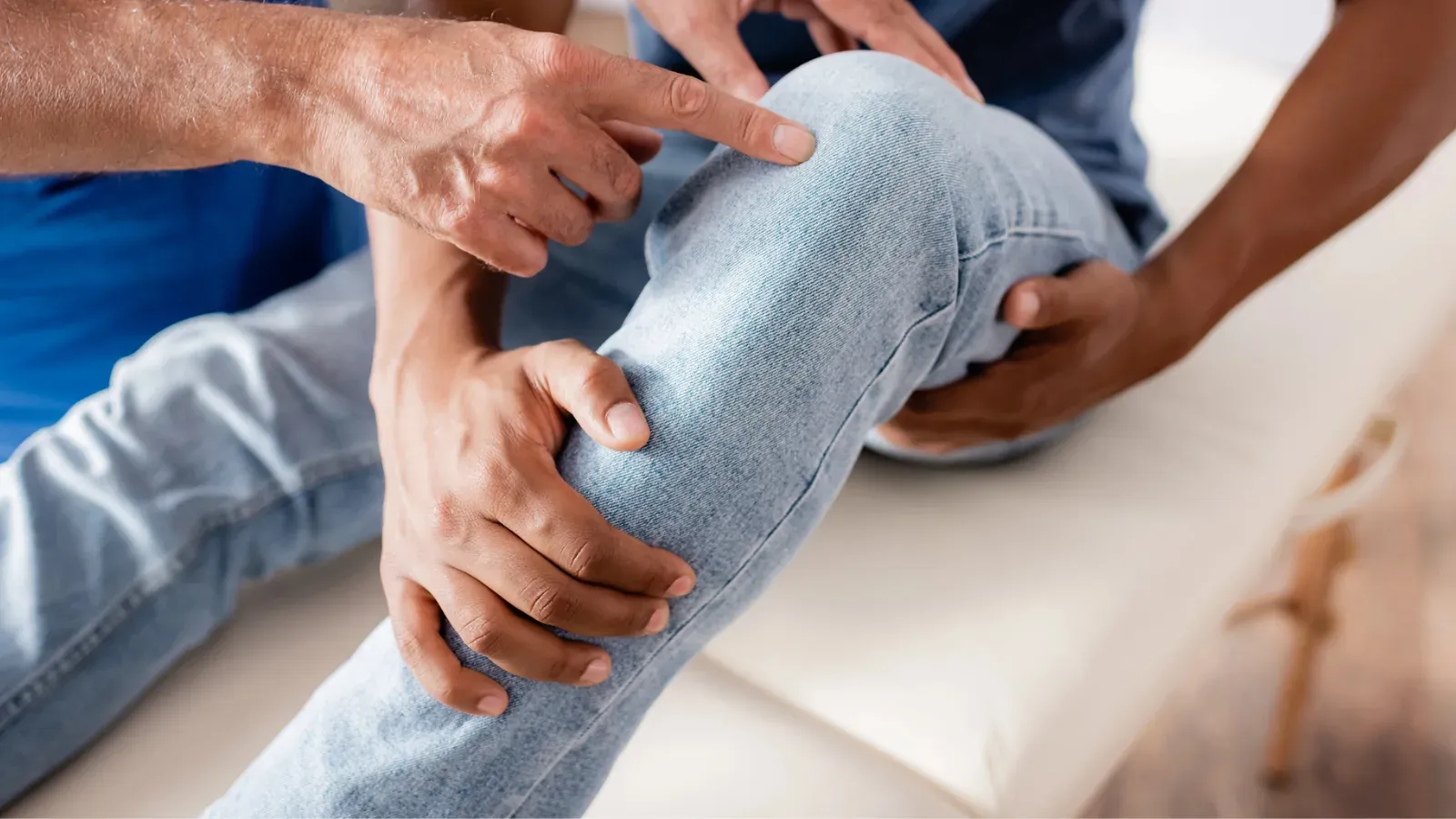
The knee is a hinge sitting between two joints that rotate, the hip above and the foot and ankle below. That position is why knee pain is so often driven from somewhere other than the knee.
How the hip controls the thigh and how the foot loads underneath both change what the knee has to absorb. A knee that keeps being irritated despite treatment is frequently being loaded by one of them, which is why the assessment looks above and below rather than at the sore joint alone.
What causes it
- Patellofemoral pain, around or behind the kneecap, worse on stairs, squatting or after long sitting. The most common presentation seen here
- Patellar and quadriceps tendon presentations, usually load-related and common in running and jumping sport
- Iliotibial band irritation at the outside of the knee, typically in runners and typically at a consistent distance into a run
- Meniscal and cartilage changes, catching, locking, or pain on twisting
- Osteoarthritic change, with morning stiffness and pain that eases with gentle movement
- Referred pain from the hip or lower back, which is more common than people expect
When to see a chiropractor
Early with load-related presentations, before the compensations start loading the hip and lower back.
A hot, red, swollen knee with fever needs same-day medical care. After an injury, book an examination, especially if the knee locked, swelled within an hour, or will not take your weight. The chiropractor examines it and refers you for imaging if it’s needed.
What the assessment covers
- A full history, where it is, what provokes it, what changed before it started, and what you are training or working towards
- Knee examination, including the tests that separate patellofemoral, tendon, meniscal and ligament presentations
- Hip strength and control, and foot and ankle mechanics
- How you walk, squat and load, which is where most of the useful information actually comes from
- An explanation of what was found, before any treatment
What treatment involves
- Chiropractic adjustment of the knee, hip, ankle or lower back, where restriction is contributing
- Massage therapy through the quadriceps, hamstrings, calf and lateral thigh
- Dry needling, where trigger points are involved
- Shockwave therapy for long-standing tendon presentations that have not settled with loading work alone
- Rehabilitation exercises, progressive strengthening, which for most knee presentations is the treatment rather than an addition to it
Between appointments
Knee presentations are load problems more often than they are tissue problems, so what changes them is what you do with the load: training volume, surface, footwear, how long you sit before moving, and whether the strengthening gets done.
Where imaging or specialist care is the next step, you will get a detailed letter outlining the findings and recommendations, including the specialist we believe is best suited to your needs.
Frequently asked questions
Why would a chiropractor look at my hip for knee pain?
Because the knee is a hinge caught between two joints that rotate. How the hip controls the thigh and how the foot loads underneath both change what the knee has to absorb, and a knee that keeps being irritated despite treatment is frequently being driven from one of them. Treating only where it hurts is the most common reason knee pain returns.
Is it safe to keep running?
Often yes, at modified volume, and the answer depends on what the assessment finds. Load-related knee presentations usually respond better to reduced load than to complete rest, because rest deconditions the tissue that needs to tolerate the load again. What has to change, distance, surface, cadence, hills, is a specific conversation rather than a general one.
My knee clicks and grinds. Is that damage?
Not on its own. Painless clicking and grinding is extremely common and is present in plenty of knees that work perfectly well. What is worth assessing is grinding that comes with pain, swelling, catching, or a knee that gives way.
Do I need a scan?
Usually not initially. Imaging is useful where it would change what happens next, a suspected meniscal or ligament tear, a knee that locks, significant swelling straight after an injury, or a presentation that has not responded as expected. The chiropractor will refer where that applies, to bulk-billed providers wherever possible.
When is knee pain urgent?
A hot, red, swollen knee with fever needs same-day medical care. After an injury, book an examination, especially if the knee locked, swelled within an hour, or will not take your weight. The chiropractor examines it and refers you for imaging if it's needed.
Ready to book?
Appointments Monday to Saturday, with confirmation by SMS.