
A scan report can be scary. Words like bulge, protrusion, herniation, and extrusion sound alarming but often mean very different things.
The good news: most disc problems improve without surgery. Research shows the body can reabsorb disc material over time, and most people recover with conservative care [1].
If you are dealing with disc pain, our disc injury chiropractor service in Melbourne starts with a careful assessment before any hands-on treatment.
At Chiropractor Melbourne in Brunswick West, we see disc cases every week and explain what each scan finding really means.
Each spinal disc has a tough outer ring called the annulus and a soft gel centre called the nucleus. Think of it like a jam doughnut.
A bulge means the outer ring is pushed out evenly, like a tyre that has lost air. The disc looks wider on a scan. The wall of the disc is still intact.
Bulges are very common, even in people with no pain. Many people walk around with bulges they never notice. [SOURCE TBD]
When a bulge causes pain, it is usually because the disc is pressing on a nearby nerve or irritating the joints around it. Symptoms often build slowly with sitting, lifting, or twisting.
A herniated disc is a step further. The outer ring tears, and some of the inner gel pushes out through the crack.
When that gel touches a nerve, you get sharper symptoms. Pain can shoot down the leg, into the calf, or down the arm depending on which disc is affected.
Numbness, pins and needles, and weakness can come with it. Coughing or sneezing may spike the pain.
Herniated discs in the lower back often cause sciatica. For more on that link, read our piece Can a Chiropractor Help Sciatica Pain.
Related reading: how long until you see chiropractic results.
Related reading: what to expect on your first visit.
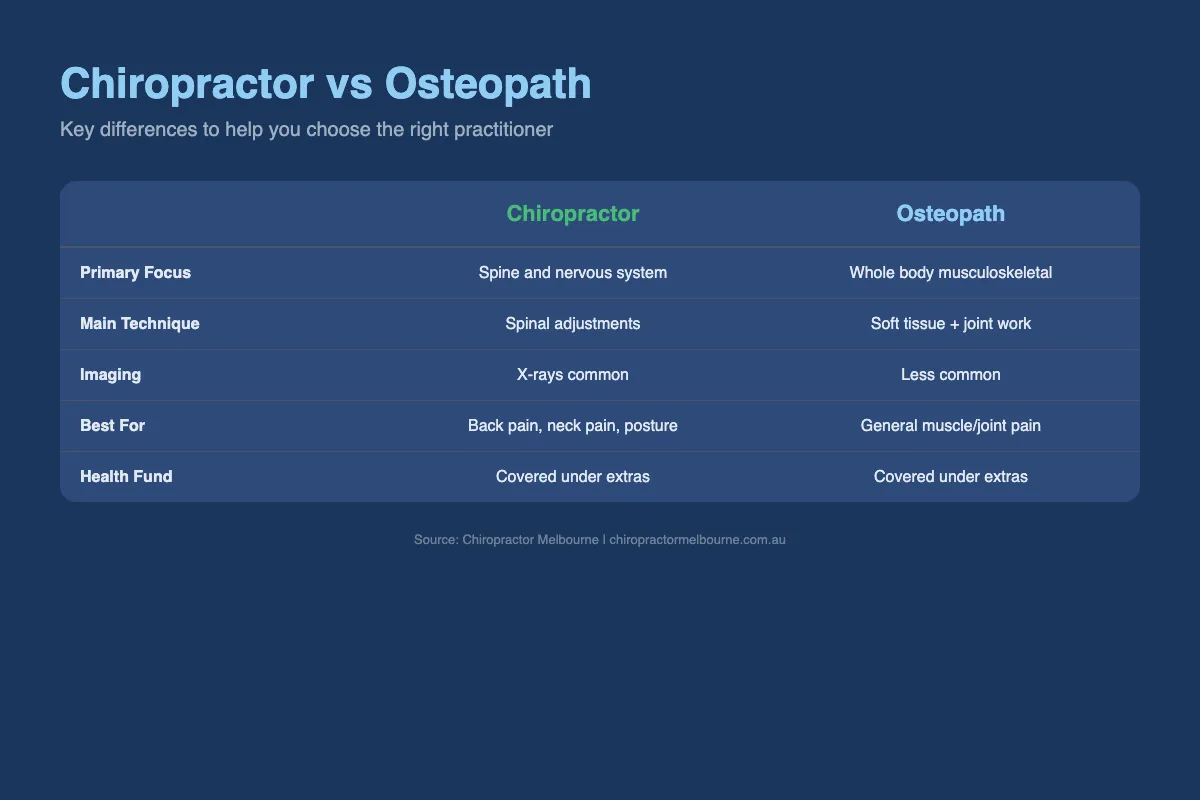
Step one is always a full assessment. We take a history, run physical tests, and check reflexes, sensation, and strength. If imaging is needed, we organise it.
Treatment depends on the case. For most disc bulges and many herniations, we use gentle techniques rather than firm manual adjustments.
Spinal decompression creates negative pressure inside the disc, which can help reduce the bulge over time.
Drop-piece adjustments, low-force mobilisation, and instrument-assisted techniques all give us options to settle nerve irritation without forcing the spine.
We pair hands-on work with movement. Gentle exercises, posture coaching, and small changes to your day can help your disc heal between sessions.
If your back pain is more general than a clear disc issue, see our lower back pain page for what we treat. Not sure if physio is a better fit? Compare options in Chiropractor or Physio for Back Pain.
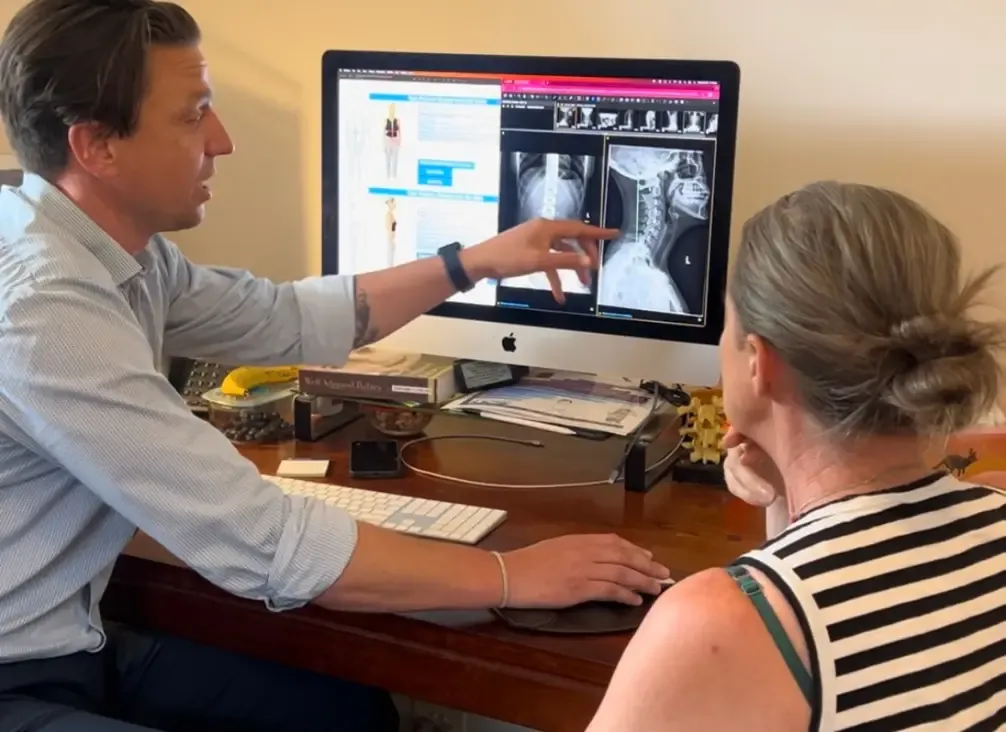
Most disc problems do not need surgery. The majority of cases settle with conservative care over weeks or months, and many disc bulges shrink on their own as the body reabsorbs disc material.
Red flags need urgent medical care, not chiropractic. See a GP or emergency department right away if you have saddle area numbness, loss of bowel or bladder control, progressive leg weakness, fever, or unexplained weight loss.
Surgery is usually only considered when severe pain or neurological signs persist beyond 6 to 8 weeks of solid conservative care, or when neurological signs are getting worse. [SOURCE TBD] Imaging guides the next step, not symptoms alone.
If something we see during your assessment looks beyond what chiropractic can handle, we tell you. We refer to your GP, a sports physician, or a spinal specialist when needed, in writing, and stay in the loop.
Steroid injections are sometimes offered as a middle step between conservative care and surgery. They can settle sharp pain but rarely fix the underlying disc; they buy time to rehab.
Done with care and the right techniques, no. We avoid forceful rotations on a known herniation and use gentle methods instead. The risk comes when a practitioner treats without a proper exam, so the assessment step is critical.
Many do. Studies show the body reabsorbs disc material over months. [SOURCE TBD] Chiropractic care, exercise, and posture work can help reduce pain and load on the disc while it heals.
Usually not. We can often work out the picture from history and exam. If your symptoms point to a serious cause, or if you are not improving, we will arrange or recommend imaging at that point.
Not sure if chiropractic care is right for you? Our team at Chiropractor Melbourne can assess your condition and recommend the best path forward. We are located in Brunswick West and accept all major health funds.
Call us today to book your first appointment. We will take the time to understand your pain and explain our treatment approach before we start.
Reviewed by Dr Voula Roumel, Chiropractor — registered since 1987.