
Can a Chiropractor Help With Headaches and Migraines?
Why Chiropractic Care Works for Headache and Migraine Relief
Headaches are one of the most common health complaints in Australia. Many people reach for painkillers without thinking about the cause. But what if the problem starts in your neck or spine?
Chiropractic care looks at the root cause of headaches. It focuses on the spine, nerves, and muscles that often trigger pain. Our headache and migraine relief clinic in Brunswick West helps patients find lasting relief without medication.
This post explains how chiropractic treatment works for headaches. You will learn which types respond best and when to seek help.
How Chiropractic Treatment Helps Relieve Headaches
Most headaches are not caused by a brain problem. They start in the neck, shoulders, or upper back. Tight muscles and stiff joints send pain signals up into the head.
A chiropractor uses cervical spine adjustments to restore proper movement. When the vertebrae in your neck move freely, nerve pressure drops. This reduces the tension that triggers headaches.
Muscle tension in the neck and shoulders is another major cause. Long hours at a desk or poor posture can tighten the suboccipital muscles at the base of your skull. These small muscles refer pain across the forehead and behind the eyes.
Chiropractic adjustments release this tension. They also improve blood flow to the head and neck. Better circulation means fewer headaches and faster recovery after a flare-up.
Nerve irritation in the upper cervical spine is a well-known headache trigger. Misaligned vertebrae can compress or irritate the nerves that run from your neck into your head. Gentle adjustments take pressure off these nerves and reduce headache frequency.
Types of Headaches a Chiropractor Can Treat
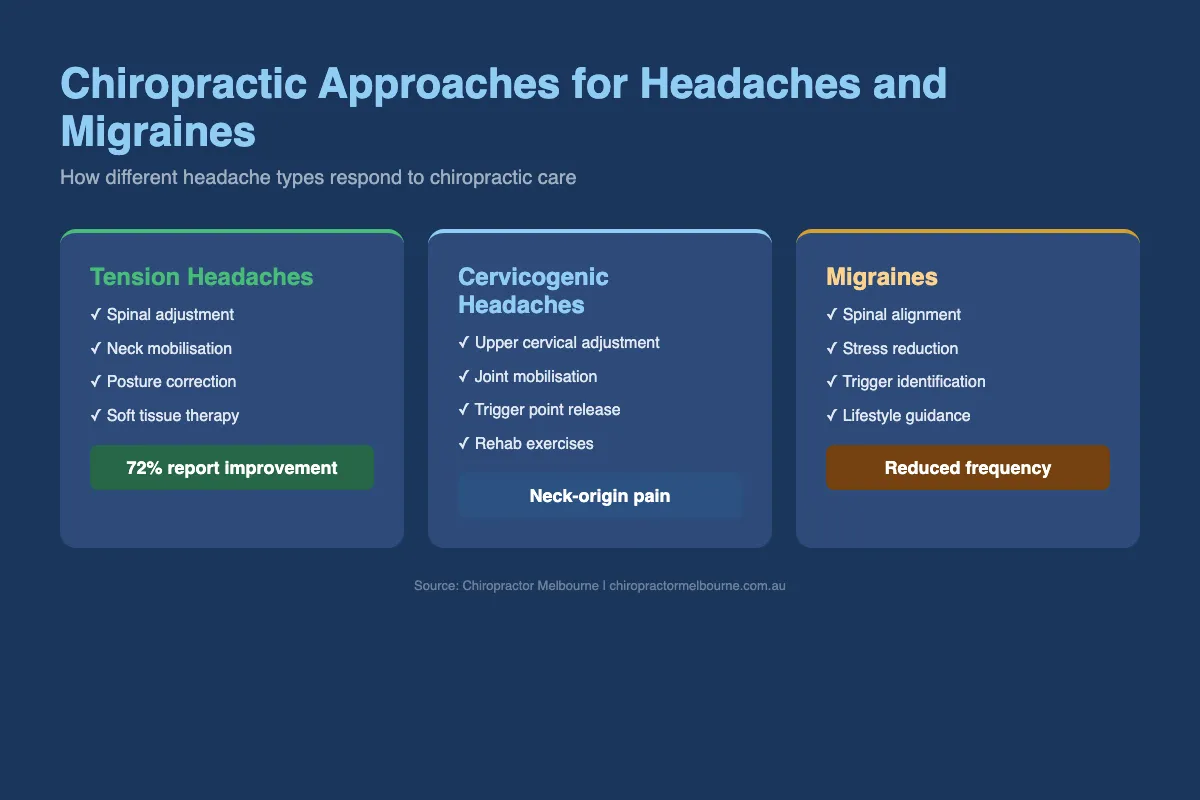
Tension Headaches
Tension headaches feel like a tight band around your head. They are the most common type. Stress, poor posture, and muscle tightness in the neck and shoulders are the main causes. Chiropractic adjustments and soft tissue work target the muscles and joints responsible for this type of pain.
Cervicogenic Headaches
Migraines
Migraines involve throbbing pain, light sensitivity, and sometimes nausea. While the exact cause is complex, spinal dysfunction and nerve irritation can be contributing factors. Research published in the European Journal of Neurology found that spinal manipulative therapy reduced migraine frequency and intensity in a number of patients.
A 2019 systematic review in the Journal of Manipulative and Physiological Therapeutics confirmed that spinal manipulation is an effective option for cervicogenic headaches and may help reduce migraine episodes.
Why Melbourne Desk Workers Get More Headaches

Melbourne is a city of office workers. Thousands of people spend eight or more hours a day at a desk staring at a screen. This creates a perfect storm for headaches.
Forward head posture is extremely common among desk workers. For every inch your head moves forward, the load on your neck muscles doubles. This extra strain tightens the muscles at the base of the skull and compresses the joints in the upper neck.
Screen strain adds another layer. Your eyes focus on a fixed point for hours. This causes the muscles around your eyes and forehead to fatigue. Combined with poor neck posture, screen use is one of the biggest headache triggers in modern life.
A study in The Journal of Headache and Pain found that cervical musculoskeletal dysfunction was present in a large percentage of patients with chronic headaches. The researchers noted that manual therapy targeting the cervical spine produced significant improvements.
At our Brunswick West clinic, we see this pattern every week. Office workers come in with headaches that started years ago. Many have tried painkillers, eye tests, and even scans. Chiropractic care often provides the relief they have been searching for.
When to See a Chiropractor vs a GP for Headaches
Not every headache needs a trip to the GP. If your headaches are linked to neck stiffness, posture, or muscle tension, a chiropractor is a great first step. We assess your spine and identify the mechanical cause of your pain.
You should see a GP first if your headache comes on suddenly and is the worst you have ever felt. The same applies if headaches are paired with fever, confusion, vision changes, or weakness. These symptoms may point to something more serious that needs medical investigation.
For most recurring headaches, chiropractic care is safe and effective. It works well alongside other treatments your GP may suggest. Many patients use both services together for the best results.
If your headaches are related to long hours at a desk, you may also benefit from reading our guide on chiropractic care for desk job back pain. For those unsure whether to see a chiropractor or another practitioner, our post on chiropractor vs physio for back pain explains the key differences.
Frequently Asked Questions About Chiropractic and Headaches
Most patients notice improvement within three to six visits. The exact number depends on the cause and severity of your headaches. Chronic headaches that have lasted years may need a longer treatment plan. Your chiropractor will give you a clear timeline after your first assessment.
Get Relief From Headaches and Migraines in Brunswick West
Related Articles
How Often Should You See a Chiropractor?
Chiropractor vs Osteopath: Which Should You See?
How Much Does a Chiropractor Cost in Melbourne?
Reviewed by Dr Voula Roumel, Chiropractor — registered since 1987.